
Author:
MLL Legal AG
 Published: 12.10.2026
Fonts in Advertising: The Overlooked Clearance Risk
Typefaces and fonts are everywhere: In campaigns, on websites, in apps, on packaging and in social media assets. Yet what many advertisers and agencies underestimate is that the use of fonts, particularly in digital media, poses significant legal and financial risks.
Brand owners are increasingly confronted with substantial licensing claims from font foundries, some of which systematically and automatically scan the internet for licensing violations. While images, music and claims are routinely cleared before a campaign goes live, fonts are often treated as a mere design choice. This article examines the background, outlines the key legal questions, and explains why fonts belong on every campaign clearance checklist.
In recent years, enforcement practices by major font providers have intensified dramatically. At the centre of this are Font-Foundries such as Monotype, which is the world's largest provider of font software and owner of numerous well-known typefaces such as Helvetica, Times New Roman and Futura.
Large advertisers in particular are contacted on the basis of automated analysis reports and accused of unlicensed use of certain fonts. The retroactive licensing claims asserted in this manner can amount to substantial sums. They often come as a surprise, especially if a licence had previously been concluded for the relevant fonts and its scope was unknowingly exceeded – for example because a font licensed for print was later used in a web campaign or an app. Claims can also follow a change in rights ownership, which can lead to a drastically increased licensing demand.
From an advertising law perspective, fonts raise questions at several stages of a campaign. The scope of use matters: desktop, web, app, digital advertising, broadcast and packaging uses are usually licensed separately, and licences are often limited in time, territory or reach (e.g. page views). A campaign that is extended to new channels, markets or periods may therefore leave the licensed scope without anyone noticing. Digital campaigns are particularly exposed. Displaying a typeface on websites, landing pages or in apps requires embedding font files in the code, where they are easily detectable from the outside. Marketing teams and agencies often deviate, consciously or unconsciously, from corporate identity guidelines on a project-by-project basis, and developers frequently embed additional fonts merely as so-called fallbacks, i.e. substitutes when the primary font cannot be displayed. Each embedded font file is a potential trigger for a claim.
In practice, fonts are typically selected by agencies, designers or developers, while the claim is addressed to the brand owner whose website or campaign displays them. Agency agreements should therefore clearly allocate responsibility for font licensing: who procures the licence, in whose name it is held, which uses it covers, and whether the agency warrants that all creative assets, including fonts, are properly licensed. Some licence terms restrict use by third parties such as agencies or subsidiaries, so the licence holder and the actual user may not be the same. Handover of campaign assets at the end of an agency relationship should also include the corresponding font licences. Typefaces are often a core element of a brand's visual identity, used in logos, word marks and packaging design. A trade mark registration for a logo does not replace the licence required for the underlying font software, and the licence terms of some foundries specifically address use in logos and trade marks. Brands that rely heavily on a particular typeface may consider commissioning a proprietary typeface – as major brands have done – to gain long-term control and independence from changing licensing models.
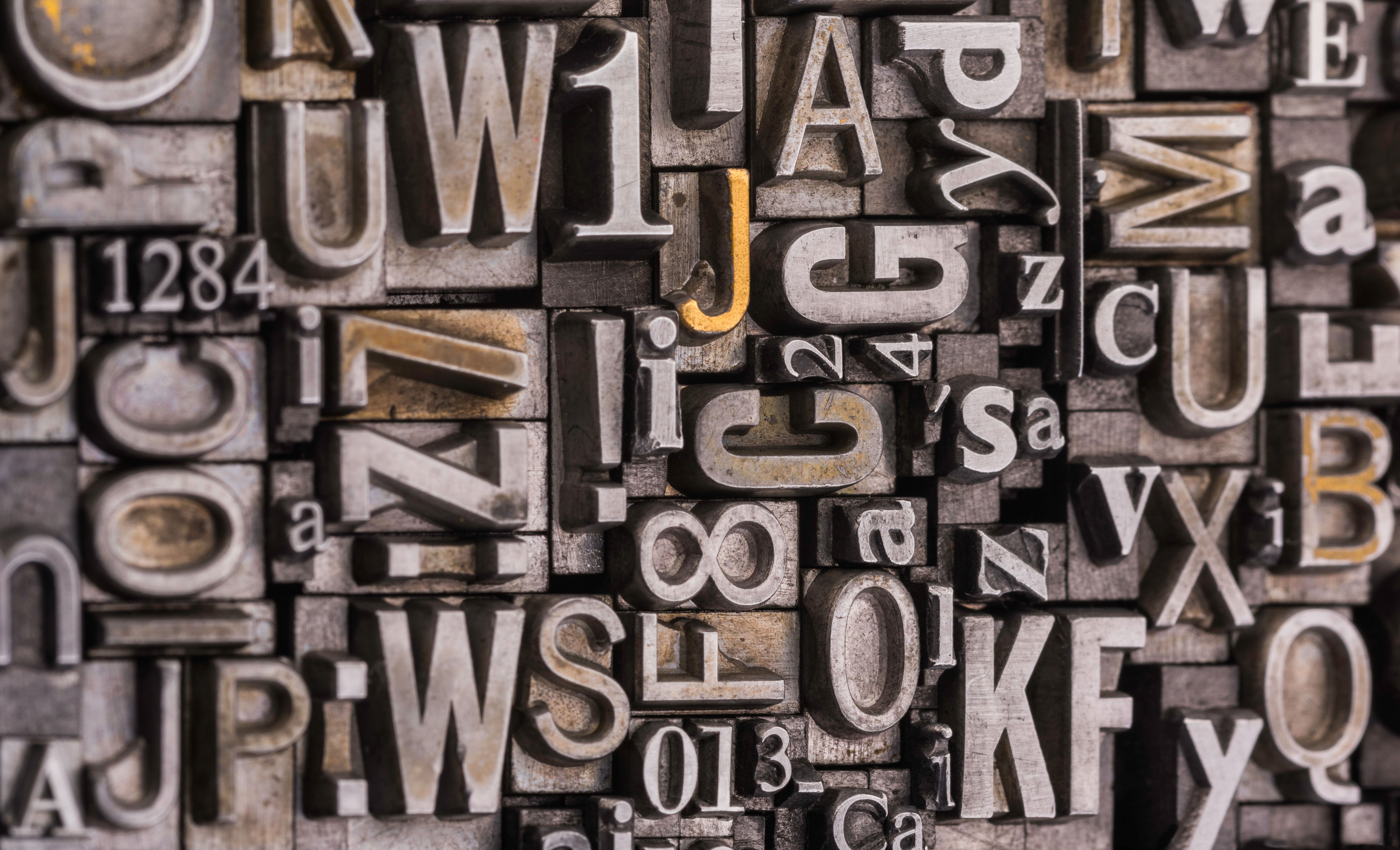
The legal assessment of font-related claims requires an understanding of how typefaces work at the intersection of marketing, IT and law. In terms of terminology, “typeface” refers to the design of a font, i.e. the appearance of letters, numbers and characters as a visual concept. A font is the concrete technical implementation of a typeface, traditionally as metal or wooden type and today mostly as a digital font file. Traditionally, copyright protection for typefaces has largely been denied. Under the practice of the U.S. Copyright Office, there is generally no copyright in typeface designs. In Europe, the situation is more nuanced: while the German Federal Court of Justice recognised in principle as early as 1958 (“Candida”) that particularly original typefaces may be protected, the threshold remains high in practice. In 2023, the Tribunal Judiciaire de Paris recognised the “Le Monde Journal” typeface as a copyright-protected work but held that another typeface did not infringe it because its overall impression differed sufficiently.
This must be distinguished from the question of whether font software is protected as a computer program. This is generally affirmed where the files contain sufficient control instructions, which can usually be assumed. In Germany, the Regional Court of Cologne confirmed in 2000 that font software is protected as a computer program. For advertisers, this means that a claim usually concerns the font file used, not the visual appearance of the text as such. Even where copyright protection exists, the decisive question is often which acts of use are covered by the licence. Licensing models of major foundries are complex, distinguishing between desktop, web, app and server use, and are often time-limited and tied to usage volumes. Many companies do not know which fonts are actually used across their channels and campaigns, or whether their licences cover that use. Copyright is territorial, meaning that a claimant may generally invoke the laws of each country in which a campaign or website has a commercial effect. Clearance for one market therefore does not necessarily protect against claims in others. In particular, campaigns often have sufficient connections to the U.S. to create exposure to potentially substantial damages and litigation costs.
Practical Recommendations:
● Include fonts in every campaign clearance checklist, alongside images, music and claims.
● Keep an inventory of fonts used across websites, apps, digital advertising and print, and match it against existing licences.
● Remove unnecessary embedded fonts, in particular unused fallbacks.
● Allocate font licensing responsibility, warranties and indemnities in agency agreements.
● Check licence scope before extending a campaign to new channels, markets or periods.
● Check licence scope before extending a campaign to new channels, markets or periods.
● If a claim is made for past use, scrutinise it carefully.